
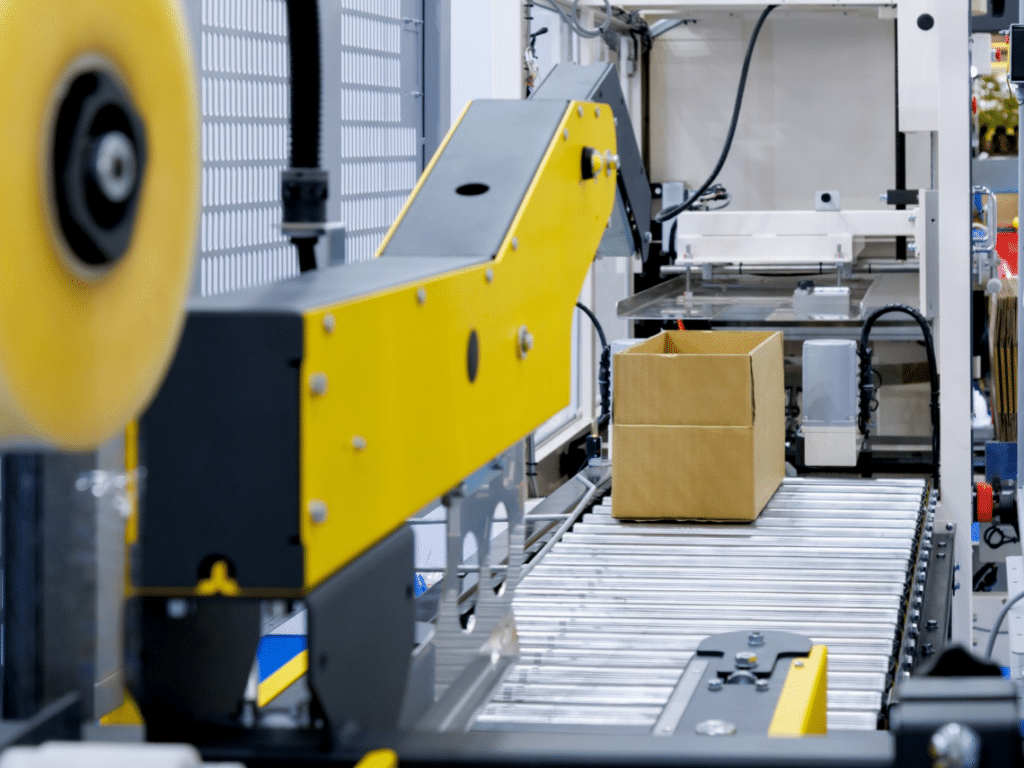
Manufacturing is getting smarter, and packaging is part of that change. As businesses look for ways to move products faster, reduce errors, and keep up with demand, packaging automation is becoming an important part of modern production.
From automated filling and sealing to robotic case packing, new technologies are changing how products move from production lines to customers. For businesses, understanding these changes can help them make better decisions about their packaging operations.
What Is Packaging Automation?
Packaging automation uses machines, software, and other technology to complete packaging tasks with less manual work. Depending on the operation, automation can handle one step or several parts of the packaging process.
Common examples include:
- Filling and dispensing products
- Labeling and printing
- Sealing boxes and containers
- Sorting products
- Palletizing finished goods
- Moving materials between production stages
The goal is not always to remove people from the process. Instead, packaging automation can handle repetitive tasks while employees focus on work that requires more judgment, problem-solving, or quality control.
How Packaging Automation Is Changing the Supply Chain
A packaging line can have a direct effect on the rest of the supply chain. When products are packaged more consistently and efficiently, they can move through warehouses and distribution centers more smoothly.
This can help businesses:
- Increase production speed
- Reduce packaging errors
- Improve consistency
- Reduce product damage
- Track production more closely
- Use labor more efficiently
For example, an automated system can apply labels at a consistent position and speed. This can reduce mistakes that may slow down shipping or require products to be repackaged.
Automation can also help businesses respond to changes in demand. When order volumes increase, a more automated packaging process may allow a company to increase output without making the same increase in manual labor.
New Technology Is Making Packaging Smarter
Today’s packaging automation systems can do more than simply move products through a machine. Connected equipment can collect production data and help operators see how a line is performing.
Sensors and monitoring systems can identify issues such as equipment slowdowns or changes in production speed. Some systems can also provide alerts when maintenance may be needed.
Robotics is another growing part of packaging automation. Robots can perform repetitive jobs such as picking products, placing items into boxes, and stacking cases on pallets.
These technologies can work together to create a more connected packaging operation.
What Businesses Should Consider Before Automating
While automation can offer major benefits, it is not the right answer for every business or every packaging line. Automation equipment can require a significant investment, so businesses should first identify where it can have the greatest impact.
Before investing, consider:
- Which packaging tasks take the most time
- Where errors happen most often
- How much production volume changes throughout the year
- Whether current equipment can be upgraded
- Available floor space
- Employee training needs
- Maintenance and service requirements
It can make sense to start with one repetitive task instead of automating an entire production line at once. A smaller project can show whether the investment improves speed, accuracy, or operating costs before a business expands the system.
The Importance of Flexible Packaging Automation
Product lines change. New products are introduced, package sizes are updated, and customer demand can shift. That makes flexibility an important factor when evaluating packaging automation.
Equipment that can handle different package sizes or product types may provide more value over time than a system built around one specific product.
Businesses should also think about future growth. The best investment is not necessarily the system with the most features. It is the one that fits the operation today while leaving room for tomorrow.
Staying Ahead of Packaging Industry Changes
As manufacturing becomes more connected, packaging automation will continue to play a role in how products are made, packed, stored, and shipped. Businesses that understand these changes can better identify opportunities to improve their own operations.
The key is to look beyond the technology itself. Packaging automation should solve a real production problem, improve efficiency, or make the packaging process more consistent.
At Pioneer Packaging, we keep up with changes in packaging materials, equipment, and production methods so businesses can make informed packaging decisions. Whether you are exploring automation for the first time or looking for ways to improve an existing operation, understanding the available options is a good place to start.
Pioneer Packaging: Your Custom Packaging Solution Company
For over 38 years, Pioneer Packaging has been your company’s go-to for designing product packaging that sells and performs.
So whether you’re looking to get your paper product packaging at affordable prices or attract new consumers, we’ll find the best packaging solutions that fit your needs. We strive to keep costs down as much as possible to help our customers keep their brands moving along production lines.
Contact Pioneer Packaging today and learn why we’re a leader in B2B packaging solutions.